Stepmothers: Not so Wicked after all
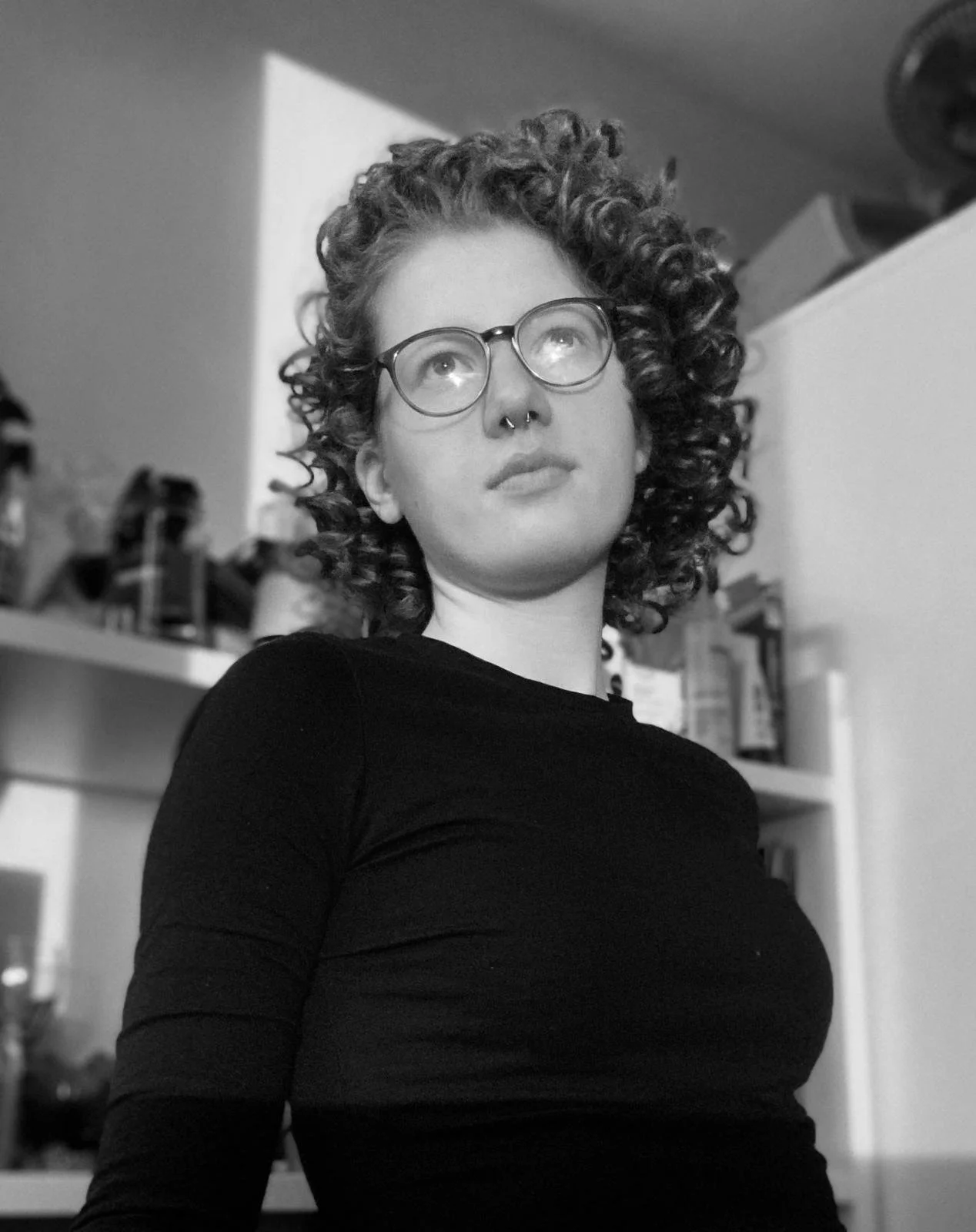
Last Friday, I had the pleasure of interviewing Georgina Warren on her book Tales of Virtuous Stepmothers. We chatted about her approach to writing, why her stories focus on rehabilitating the stepmother image, and the stories she created.
M: What does your writing process look like?
GW: I have read many books in my lifetime ,and when I get an idea for a new story, I always start with those first two words: “what if?”. From those two words, I usually think about different plot elements I want to change, if I see a particular pattern in the story, or clichés. I think to myself: “this is what we usually see in this type of situation but what if we did this?” Sometimes I get ideas about reframing character archetypes as well, which is what I thought of for this book: The Tales of the Virtuous Stepmother. I wanted to reframe how that character is usually portrayed in Fantasy, because the three most famous stories are Cinderella, Hansel and Gretel, and Snow White, and all those characters have wicked stepmothers.I thought to myself: there is a lot of people in blended families that feel awkward reading about those stories, because some of them have stepmothers that are not wicked villains.
M: So, you basically look for the place from which you can disrupt the pattern?
GW: Exactly! I enjoy following patterns, in my daily work I catalogue books from the Library of Congress; but it is true that I have a transgressive approach to stories. I look for patterns, and then I try to find creative ways to break those patterns, to write new rules in folklore.
M: When did you first start writing?
GW: From an early age, I’ve always loved writing stories. I think I created my own illustrated version of a fairytale, The Three Billy Goats Gruff, when I was a kid. I also have a tradition of reading stories with my dad: we would take turns at voicing the characters in some of our favourite stories, particularly the Harry Potter books. When my parents separated, I only saw my dad for weekend visits, so I was always looking forward to those moments because we could then finish the next chapter of the book that had been published lately. I also spent a lot of time just exploring my local libraries and bookstores. I had been homeschooled for a part of my life, so once I got enrolled in school with my peers I fell into learning creative writing exercises, and all my English Literature teachers had something special to teach me about reinterpreting characters or the plots of stories. They helped me develop the tools for interpreting and breaking these patterns. I transferred schools before I went to college, and the second school I went to had drama classes, so I discovered another aspect of my creative voice: thinking about how I wanted my characters to perform. I then conceived these ideas for stories throughout high school and college: reinterpretations of some traditional ones that I thought of, and just composing my own original tales; because it seems like a lot of Fantasy authors want to retell and put their own spin on established stories but they are basically working from the same infrastructure. So, I decided to do away with that, and just compose my own original stories. I want to give my readers a surprise.
M: Yes, that is something that has impressed me as well with your stories: I have spent countless hours of my childhood reading classic fairytales like the Grimm brothers, and none of your stories fell into the patterns they had, which the reader would immediately recognize and thus not be surprised by the turns of the story.
GW: That is true, because when you pick the stepmother as the main character she is having a different experience of romance, compared to the two young lovers that you often see in traditional stories. Those stories tend to focus on two people coming together before the wedding and before they have children; but the stepmother has already gained an extra layer of wisdom compared to the young maiden, because she has experienced loss and disappointment. Sometimes life doesn’t turn out the way you plan it to, there are disappointments, and the role of the stepmother and her husband coming together is to give a sense of endurance. People think about the idea of true love as something that first time lovers share, but the definition of true love feels different when focused on the stepmother: it shows that people can actually love more than one person in a single lifetime, and that it is possible to find new beginnings after loss.
M: I suppose your own stepmother inspired you to start looking at how stepmothers were viewed differently?
GW: Yes, she is the primary archetype, the first virtuous stepmother from whom I’ve drawn many of my characteristics. She has had other relationships before she got together with my dad, but she never had any children from those, she only had me and my older sister as two stepdaughters. She also has had many different life experiences: she works as a landscape architect and her specialty is urban design, she works towards developing more sustainable neighbourhoods, so she has a very strong community building mindset, and she was the eldest daughter of six kids in her family. I think that when you look at the stepmother character you see someone who has been often misunderstood: when she is stepping into a family already having preestablished relationships and history, she must navigate those challenges of family bonding and finding balance between protecting the children, and helping them grow and become self-sufficient by the time they are old enough to leave home. Sometimes being a stepmother can be a thankless job. Sometimes the children may not appreciate her efforts, and having the courage to do what is right even in the face of opposition and even when other people don’t believe in you, having the strength to believe in yourself, that comes across a lot in the stories you would have read.
Published 2023
M: I’m also very interested in hearing what your stepmother thought about you creating those stories, because I suppose she has heard of them and maybe read them as well?
GW: Yes, she knew that I had this idea from the beginning, and she has always been very supportive. She has helped me develop ideas about some of the plot elements in the stories, and also some creative ideas on the illustrations.
M: I also wanted to know how you went about creating those stories, because they are all quite different and they each give a different perspective on who the stepmother is.
GW: That is true, because you may find some of the tales actually put the stepmother in the spotlight: that is true for Aisimetra and the Manticore’s Eggs, Benevoline and the Dire Crown, and The Dragon Mother but you may also find a few stories like The Prince Who Learned to Forgive and Princess Sanspied, and those two stories focus on the stepchild, with the stepmother in a supporting role. It is a role similar to the fairy godmother in Cinderella: she is not a minor supporting character; she has an integral supporting role that helps moving the plot forward.
M: Are there more of these stories? Did you have a whole selection to go through and figure out what would fit in a collection, or are these stories the only ones that exist in that format?
GW: Actually, Tales of Virtuous Stepmothers is the first part of a three-part fairytale treasury that I plan to create. The second book is being written, and once I get all the stories finished, I plan to reissue them into a full book: The Complete Tales of Virtuous Stepmothers. I also have two accompanying novels that are connected to the same theme: one is a pirate story, and the other is a circus story. I also wanted to move beyond the established setting for fairytales because most of them tend to take place in the medieval setting with castles, knights and dragons; but my dad actually studied some history and folklore from classic Antiquity, so I work to create some stories from that time period as a reference to our family history. So, you will find that one story from this collection is set in Ancient Rome because it features gladiator fights and manticores, which are not commonly seen in those medieval fairytales that I mentioned. And upcoming stories will be set in some other places and times, like in Africa, Australia and you may even find a handful of stories that are also set in the United-Sates.
M: There is one story which to me stands out from the others: The Bird of Many Voices, because it’s a completely different perspective, as all the characters are animals. Would you please tell me a bit more about it?
GW: When I created The Bird of Many Voices, I thought to myself: “How would it feel to create a stepmother story where all of the characters are birds?” and I conceived that. You could say I took a bit of inspiration from Watership Down by Richard Adams, because I enjoyed his take on the way he interpreted this world of rabbits. I also think I have always had a deep fascination for birds, in terms of how they represent coming-of-age, leaving the nest and coming out of your shell. This has been a somewhat recurring motif in my own life: when I got enrolled in school, I had some challenges to overcome because I was behind my peers in some aspects of my life, and so I had to work harder to catch up and gain more confidence in some areas. So, you may find that motif with some of the characters: they are all trying to overcome self-doubt, and some of them may be outcasts. Their goal is to try to find their own place and meet some trustworthy friends with whom they can build a more supportive and loving family.
M: Yes, I think it’s most noticeable with that story, especially so in Princess Sanspied, as she is also looking for her own place, and trying to be useful in the world she lives in.
GW: Yes, Princess Sanspied was born without feet, and I wanted to take a more positive approach when it comes to writing a character with a disability. I didn’t want this one to become another sob-story about finding acceptance, so I gave her a cute little pet pig as a companion because many people with disabilities have service animals and I decided I wanted my princess to have a cute pet companion. I wanted to show that this princess, even though she is a little bit different from everybody else, has a stepmother who works to foster her confidence and to show that she is capable of doing many things, until she is strong enough to go out on her own heroic quest.
M: Out of all these stories, is there one that is your favourite?
GW: All those stories were special to me in different ways, though I will admit that I really enjoyed The Bird of Many Voices, and The Dragon Mother. The latter draws a bit of inspiration from the ancient legend of Romulus and Remus, in which a wolf finds twin babies in the wilderness, only this time the animal mother is a dragon. She then gets connected with a widowed king and his daughter, so I’ve looked at these stories that feature animal transformations, particularly when it comes to mythical creatures becoming human, and I thought to myself that those stories don’t really talk about some of the challenges of these transformations: just because you look like a human doesn’t mean that you really know how to be a human. It also connects with people on the autism spectrum who may not always understand social cues or might struggle to integrate with other people because they have different preferences and communication patterns. Those are elements that I have experienced personally, and it took me some time to come to terms with it and to develop my own strengths.
M: All those nuances come through very well in that story as well as in The Bird of Many Voices. Everything in those stories is so layered, and it is fascinating to read from a point of view that is removed from human society but the society of the birds still functions in the same way: characters who are different aren’t accepted or don’t belong quite as well, and then when they do find a place where they belong there are external forces that threaten that place.
GW: Yes, you will find that the main character in The Bird of Many Voices is a bird that is different from all the others, having the ability of vocal mimicry: she is able to sing any bird song, not just the ones from her species. She then comes across a society of odd birds who all have different traits, and they are more accepting of her. I did not want to replay the same idea of an outcast assimilating into society. She is not accepted because other people have decided that her voice is useful, she finds fulfilment because she connects with people who are open hearted, and they accept her because they are different too.
M: Do you think you have successfully managed to rehabilitate the image of stepmothers in your stories? Do you think it will give people something to think about?
GW: Yes, I feel in a sense that I have, and that there is still more work to be done. All the stories have stepmothers facing situations like navigating conflict between the stepmother and the biological mother, as you have seen from Aisimetra and the Manticore’s Eggs. In Benevoline and the Dire Crown we have a Queen protecting her daughter and stepdaughter when their kingdom is invaded on the Queen’s coronation day. She has to reckon with an ancient curse that has affected the royal house for generations: sometimes stepmothers feel a sense of having to fight against this history that is working against them, and every other story has got other lessons about how parenting feels tougher in different ways for the stepmother. In some cases when you look at the relationship between her and the children you may find them more amicable, and there are other times when there may be some conflict between the biological children and the stepchildren, but the stepmother is not favouring her own biological children over the step kids.
M: Do you have a support network when you write, of maybe friends and family that help you with that process?
GW: Yes, I’ve got a very big network of people that have supported me in my writing journey: my parents have been very supportive, and once I started creating a book, I found new allies, like my editor who was great in helping me improve the manuscript. I also have a couple of friends from Tell Tell Poetry, who helped me design the cover and the other supplementary materials inside the book before the launch, and then I have a writing club that I meet with every week, with whom we write together and then we read aloud and critique each other’s ideas. We also make it a point to get together each year for the local Sakura Matsuri Festival in Washington DC, and we always have such fun times. People always assume that authors are very solitary people, which is partly true, because we do need to be alone sometimes for writing, but I feel like writing also entails going out and having new experiences and connecting with different people. I like going out and do fun things like dancing, yoga, bike-riding, and I’m in a choral group so I can also sing. When I travel to places (I just got back from a trip to London), I take a lot of pictures and so I have those visual aids to refer to. I also have collected books to help me think of character names and develop other plot elements, so part of the experience of being a writer is just going out and collecting information, because authors get inspiration from everything!
M: Apart from writing, are there any other creative aspects in your life, to help you balance your writing career?
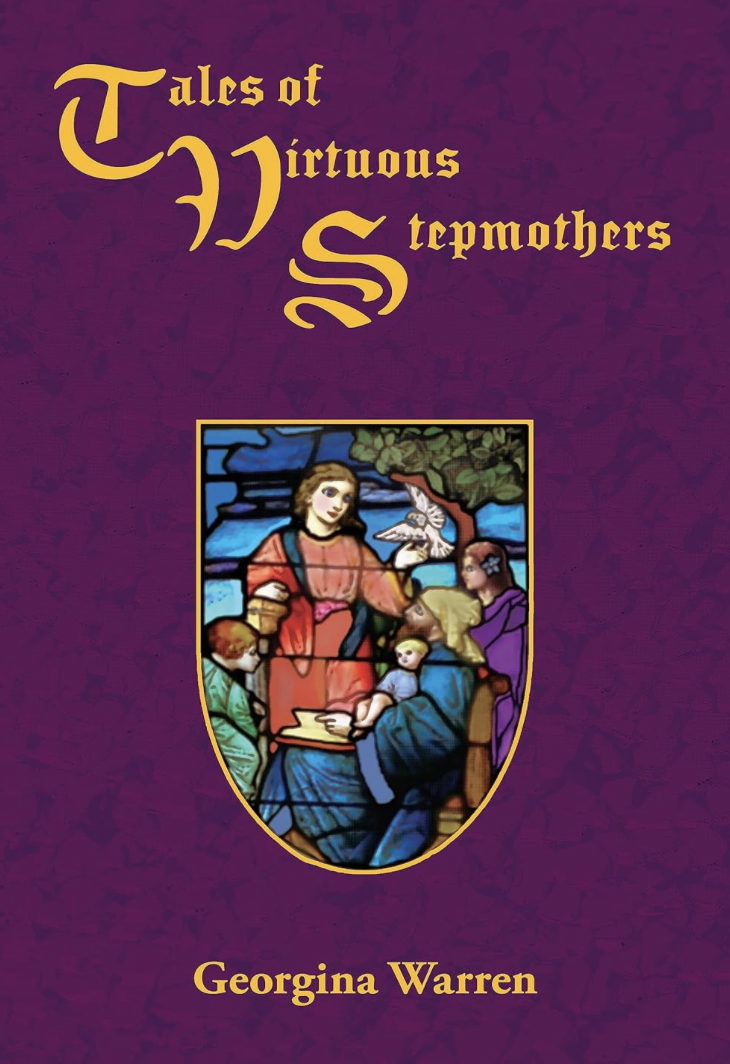
GW: Well, I also like to create Art, and the illustrations in my book were designed to both support the fairytale aspect and the aspect of the blended family: in medieval times noble families had these coat of arms with different symbols on them to represent their values, so I decided to give each story a coat of arms. I also included some stained-glass motifs in the design, because in churches you have stained glass windows to represent different chapters of the Bible, and the composition of stained glass works the same way as blended families: all these different pieces come together to make a whole picture.
M: Is there anything else you’re working on apart from your Virtuous Stepmothers collection?
GW: Apart from that I have some other story ideas I want to create for adults. For some reason, I find it easier to write children’s stories, to do that first, before I go into adult fiction. The fairytale collection was designed for a general family audience, people that are old enough to enjoy The Chronicles of Narnia, the Harry Potter books, and A Series of Unfortunate Events are the ones that I’m hoping will enjoy this book, the ones that are old enough to explore the details, and to understand the history and see how these creative motifs are reinterpreted from what the authors of traditional fairytales wrote.
M: Could you give me a sneak peek into what you are creating next?
GW: One story that I have planned to come up features a group of people on an island resort trying to survive an attack from killer sirens in the Pacific Ocean. It seems like we have had plenty of stories about werewolves, vampires and zombies but I’m hoping that we can kickstart a trend about scary mermaids soon.
To support Georgina please consider these:
To support Tales of Virtuous Stepmothers, consider posting a review on GoodReads, Amazon, Barnes and Noble, Fable and The Storygraph. You can also follow author Georgina Warren on Instagram (@r3belqueen249) and Substack for upcoming stories. Submit a request for this title to be included at your local library or book club.
On GoodReads, readers can login and vote on their favorite titles in different reading lists. If you have an account, please sign in and vote this title on any of your favorite lists of original fairy tale collections, empowering women in fiction, middle grade fantasy, inspirational family stories, and good stepmother books. This book is fun for middle grade children, teens and adults. This feature usually works better on a laptop than an iPhone.
https://www.goodreads.com/list/book/130056503
The author is also collaborating with Kelsea Laegreid, who created a petition on the Change.org website. She is collecting signatures to send a message to Disney to make more movies with good stepmothers. She wanted more fun movies to share with her kids that do not cast her as a villain. We are getting closer to 2,500 signatures needed. Follow the link below to support our cause today!