An Unpredictable Hedgerow Maze
Hazelthorn is a garden rot queer romance singular in its unique marriage of body-horror, mystery, and YA angst. With one of the most macabrely masterful opening lines in recent memory— “He knows what it is to be buried alive, the feeling of dirt in his mouth and the quiet fitting around him like a well-tailored grave.”— CG Drews wastes no time plunging readers into the suffocatingly rich halls of Hazelthorn Manor. Owned by the reclusive Byron Lennox-Hall, the Hazelthorn estate is a veridian monster of pinprick teeth and grasping vines, forever clawing at Evander’s tower window.
Evander is an oddity. A ward. A well-read ghost. But most of all, he is a boy trapped in a world of faun-papered walls and medicated numbness, forbidden from being alone with Byron’s prep-snob grandson, Laurie, for any length of time. A rule which seems only fair given that the singular memory Evander has of Laurie involves a coffin-sized hole in the ground and a mouthful of dirt. But when Byron dies under sudden and mysterious circumstances, Evander is certain there is a murderer on the loose, and the only person who can help him unravel the killer’s motive is the same boy who tried to bury him alive.
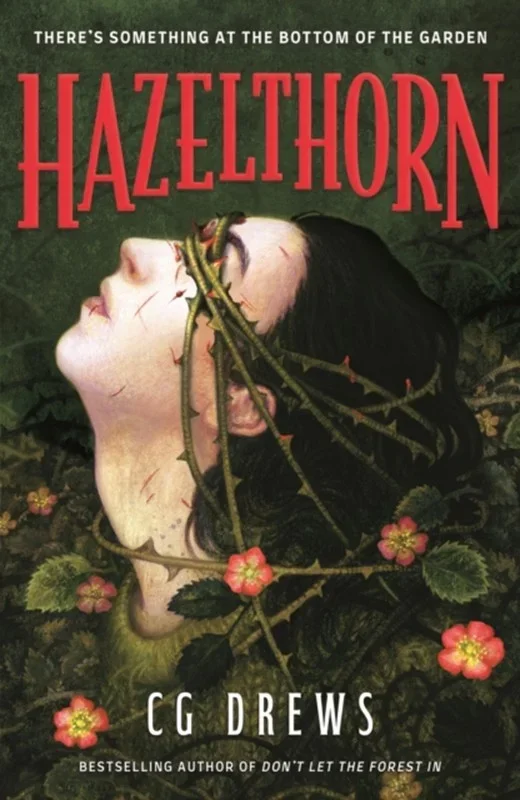
Hazelthorn, 2025
Photo via Vibes and Scribes
There is plenty to admire in Hazelthorn’s macabre prose, but even more to admire in the unique depiction of Evander as an autistic boy grappling to make sense of his traumatic past. His inner monologue is a visceral, lush world of thorny thoughts and scathing emotion that will delight and disturb even the most tight-laced readers. And while many contemporary novels champion underrepresented voices via cardboard cutout characters that read more like a check-marked box than a fully fleshed person, Hazelthorn is far from performative in its nuanced portrayal of neurodiversity. Whether it’s autism, PTSD, anxiety, or depression, CG Drews threads each topic with a finely twined string of subtlety, poeticism, and pragmatism. The result is a cast of characters that functions not as a backdrop for Evander’s quest for answers, but as adversaries, confidantes, friends, and reluctant allies that create a tapestry almost as vibrant as the toxically vicious garden creeping up Hazelthorn’s walls.
In a novel where the villains are deliciously detestable, and each twist in the path is a welcome reminder that the best stories are as unpredictable as a hedgerow maze, readers will be left heartsore at the conclusion of a story written not in blood, but chlorophyl.