The Declining Quality of Romantasy Books: What Changed?
If anyone has ever found themselves saying, ‘They don’t make books like they used to,’ it’s probably because they don’t. The publishing industry has turned into the literary equivalent of fast fashion. What once primarily consisted of high-quality books has now become a slave to capitalism. Many books are being pumped out at impressive rates with rapidly declining quality. One genre in particular has become the main victim: romantasy. Why has it become so popular? What is problematic about the fast fashionification of the literary industry? Will romantasy continue to become more popular, or has it reached its peak?
Through the help of BookTok (the discussion of books on TikTok), romantasy has gained an increasing amount of popularity since around 2020. Once COVID 19 hit and people were forced to quarantine, many people turned to books to keep themselves entertained while also seeking human connection. This is when BookTok gained traction. Similar to a book club, people shared their opinions on books. Initially, the discourse surrounding books online couldn’t possibly be viewed as negative. However, the quality of many popular books declined, with people comparing the writing to that of 13-year-olds writing fan fiction on Wattpad. Though many genres were affected by poor writing, romantasy has been impacted the most.
In these last few years, one author in particular has become the face of romantasy: Sarah J. Maas. Her series A Court of Thorns and Roses (ACOTAR), though first published in 2015, continues to attract a large audience. While there is a large population of readers who admire her work, there seems to be an equally large population of readers that strongly oppose her writing. If we ignore the fact that the author has made problematic social media posts that used the death of Breonna Taylor to promote her newest book or that the world she has built appears to have a similar map to the British Isles where Prythian (the land of the protagonist) is located on what resembles England, whereas Hybern (the land of the villains) is located on what resembles Ireland and the frequent themes of xenophobia, there are still a number of flaws in Maas’s writing itself.
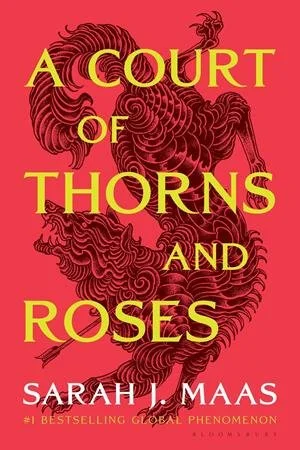
Photo via Goodreads.
When focusing on Maas’s line-editing, there are several key phrases she frequently uses that appear numerous times within one book. These lines stick out considerably, especially in dialogue. This creates very little nuance between characters and makes it difficult to differentiate them. Through her word choice alone, many of her books sound the same. Maas also has a tendency to put her main female characters through a similar arc in numerous series. Both Feyre (the ACOTAR protagonist) and Aelin (the protagonist of her neighbouring series, Throne of Glass) go through a similar cycle where they experience a severe decline in their mental health and find hope in life again, thanks to their romantic male partner. Though I have not read much past the second ACOTAR book, A Court of Mist and Fury, I have also heard—via BookTok—that A Court of Silver Flames follows the same path, but with a different character. Since her books gained such popularity, many authors have followed similar plot lines that only contribute to the lack of diversity in romantasy. Maya Oeverman, general assignment editor of Calvin University Chimes, states, ‘These books often follow a similar plot line: a girl from an unremarkable little life in a boring town gets kidnapped by some sort of elf or fae, the girl and the fae are bitter rivals until circumstances require them to work together and eventually they start to fall in love (or, more accurately, lust). Then, another muscle-clad man, even darker and more broody, enters the story to make things more complicated. More political fantasy conflict ensues, but only as a backdrop to this new romantic conflict and an absurd amount of sex.’ In addition to the same plot lines, writing mature content seems to have become a trend, but unfortunately is not always tastefully done. As Oeverman stated, there are many sex scenes in Maas’s books that aren’t necessary. Characters will end up in world-ending situations, but somehow, the main priority in these moments is to describe their intimate relationship. I believe that enjoyment for this unoriginal plot and copious amounts of sex scenes must come from young readers who simply haven’t read anything better yet, or older readers who choose to look past the poor writing quality to fulfil their sexual fantasies.
Romantasy authors are also landing in hot water with the amount of mature content in these novels due to the fact that these books are intended for underage readers. Since romantasy is known for its ‘spicy’ scenes, one could expect these books to be marketed towards adults. However, many of them are geared toward young adults (YA). The age range for YA books is often debated, but the Professional Writing Academy estimates the range to be 12-18. This is alarming if we consider how frequently sex scenes are included in these books and how explicitly detailed the writing is. Some of Maas’s books have now been upgraded to the adult category, giving her free rein to write as many of the same sex scenes as she wishes.
Despite the flaws in Maas’s writing, she has reached a high level of popularity which many authors and publishers have taken note of. There has been such an increase in the love for romantasy, that many books in this genre are being published without acknowledging the repeated plot lines or the declining quality. As stated by the author M.K. Lobb in the Writer’s Digest, ‘romantasy equals money, and publishers are a corporation first and foremost.’ Many romantasy books follow a similar plot to ACOTAR in terms of romance, focusing on a dramatic enemies-to-lovers and use fae and elves in fantasy worlds that aren’t too different from the ACOTAR world.
Even the titles and covers have similar styles that make many romantasy books look the same. Some of these books include From Blood and Ash by Jennifer Armentrout, King of Battle and Blood by Scarlett St. Clair, A Curse So Dark and Lonely by Brigid Kemmerer, and many more. Many romantasy books often include a cover with some flowers, a sword and a crown. These similar covers make it easy to discern what type of book readers will be picking up and have become very marketable. While this may be great for people who love ACOTAR and want something similar, it is frustrating for those who are tired of seeing the same watered-down plots and fantasy worlds in a majority of the fantasy books published. It doesn’t help that many of these books aren’t marketed for their original storyline or fantastical world, but rather focus on tropes such as enemies to lovers, she falls first but he falls harder and the tiny and frail girl with no training experiences who becomes a princess warrior with the help of the dark and brooding hunk of a man love interest as a way to pull readers in.
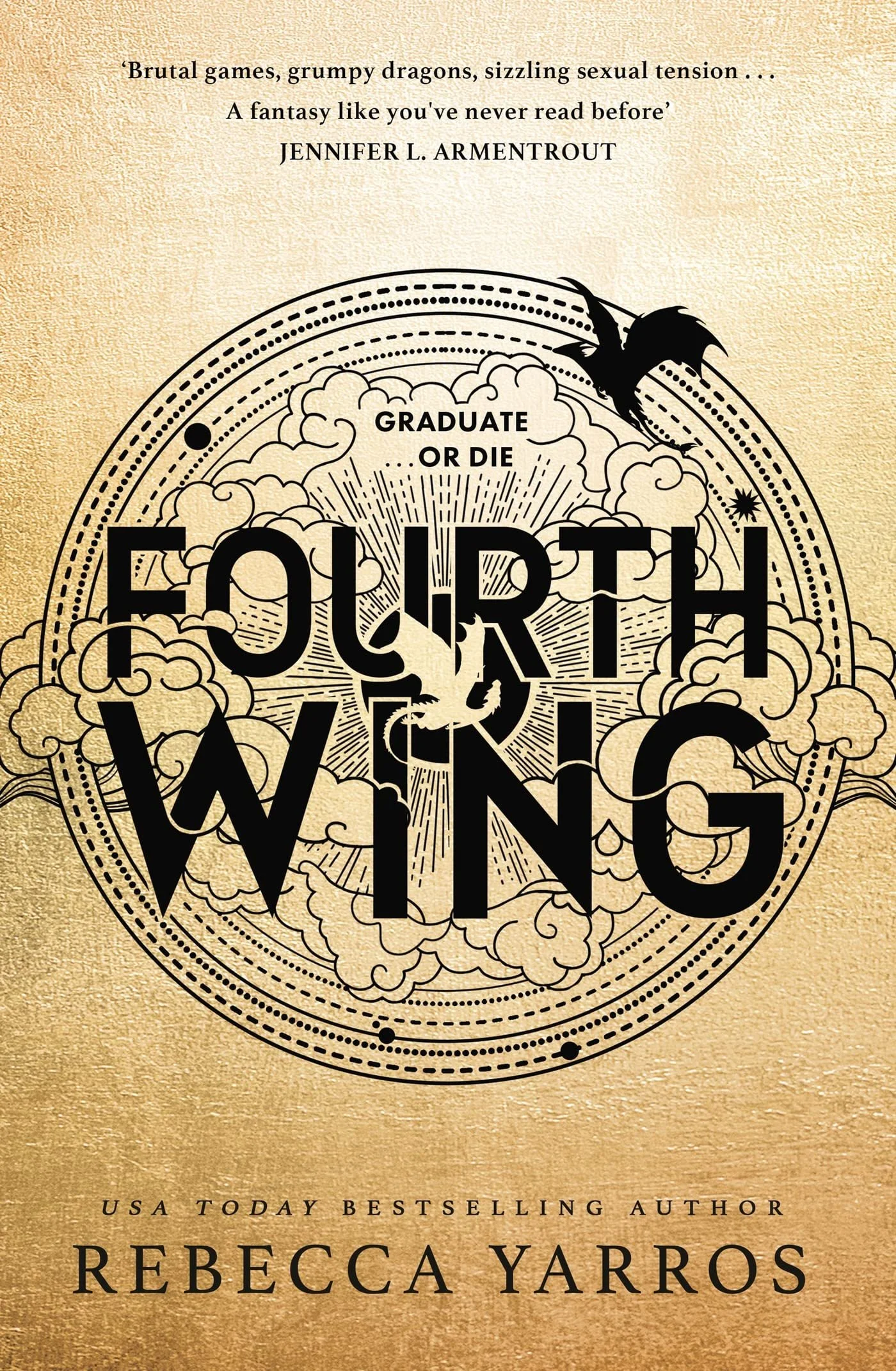
Photo via Goodreads.
In some books, the fantasy worlds could even be considered unique, but the romance, depending on the reader, is either the best part or a let-down. Fourth Wing by Rebecca Yarros is an excellent example of this type of novel. A world of dragons with corrupt politicians sounds fascinating in and of itself. However, when paired with the romance story between Violet and Xaden, which solely hinges on their sexual relationship, the quality of the story declines. Yarros does a poor job of convincing her readers that any sort of love exists between the characters. Hardly any emotional connection seems to form between them other than the fact that they no longer hate each other (the reasons behind this change aren’t particularly clear), but we are told that they are in love towards the end of the book. Holly Black, the author of The Cruel Prince, does a similar job with her love story. Her main characters supposedly follow an enemies-to-lovers plot line, but it is also poorly done. Jude, the protagonist, spends the entirety of the first novel being bullied by Cardan, the youngest son of the High King. Yet, by the end of the book, Cardan expresses romantic interest in Jude, and despite the fact that she has no reason to like him other than his physical appearance, she pursues him. It feels sloppy, yet many readers will continue to consume these romantasy books, no matter how poorly written they are, and publishers will continue to pump them out as long as they make money.
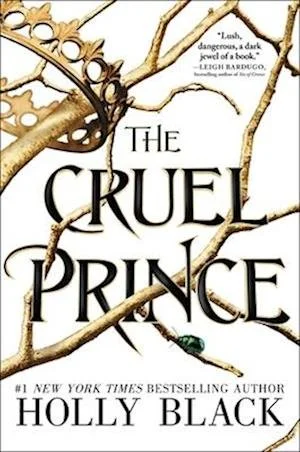
Photo via Saxo.com.
Given how much romantasy has taken over BookTok, it’s no surprise that the genre has gained the popularity it has, especially when many of these authors are looking to check-off specific tropes in an attempt to appeal to readers on BookTok. However, people have become increasingly more divided on the topic of quality literature, some even going as far as to claim that there is an epidemic of anti-intellectualism. This is because of the poor quality that has been provided to many readers who simply haven’t experienced anything better and are claiming these romantasy books to be literary masterpieces. The true mastered art of fantasy world-building lies in the hands of J.R.R. Tolkien and Robin Hobb, authors of The Lord of the Rings and The Realm of the Elderlings, respectively. Anyone wishing to find a believable enemies-to-lovers romance story would be encouraged to read Jane Austen’s Pride and Prejudice. Fantastical worlds and classic romance tropes can go hand-in-hand with good writing. Unfortunately, many readers don’t necessarily know about them and the demand for romantasy novels consequently, regardless of quality, continues to increase. The publishing industry, like any corporation, focuses on driving up sales and subsequently takes advantage of this desire to find something quick and easy as long as it has fantasy and romance in it. M.K. Lobb explains ‘romantasy has also become a sort of manufactured marketing tactic. A catch-all way to say, “This fantasy novel has a central romance, and you should read it.”’ Now that romantasy has been in the spotlight for so long, the decline in popularity might just be in sight. With this, there is hope that the speed and quality of which these books are being published changes, and that readers will soon be met with the high-quality romantasy novels they deserve.
So, where do we find the romantasy books that provide a solid love story and a fascinating fantasy world? Surely, these novels can’t all be bad. If I had an answer for readers like me, I think I would enjoy the genre a lot more than I currently am. However, I have not found romantasy novels that have sparked my interest lately. This is especially difficult, though, when it is hard to determine what is considered romantasy. Though there isn’t an official definition of romantasy, M.K. Lobb attempts to define romantasy as a genre that ‘blends romance and fantasy in a way that incorporates what are widely agreed to be the “romance plot beats.” It often requires that the protagonist’s characterization hinges upon their relationship with the love interest.’ There are some books that include a good amount of both fantasy and romance, but whether they should be lumped in with the romantasy genre is to be debated. To me, it seems like the majority of books that are considered romantasy are the ones that follow the watered-down plot and world of the ACOTAR series.
For readers who are interested in diving into the romantasy genre, I would recommend proceeding with great caution. I believe there are likely great romantasy books. However, the beauty of the genre is heavily polluted by repeated plots, tropes and characters. Some readers may find success in searching for a diamond in the rough. Others may not believe the search to be worth it, and to those I’d suggest to either move on from the genre entirely, or to simply write their own romantasy novels.
Works Cited
BBC Bitesize. “World Book Day 2026: What Is BookTok and How Did It Start? - BBC Bitesize.” BBC Bitesize, 3 Mar. 2026, www.bbc.co.uk/bitesize/articles/z9cgnk7.
Lobb, M. K. “What Is Romantasy, Anyway?” Writer’s Digest, 27 Feb. 2024, www.writersdigest.com/write-better-fiction/what-is-romantasy-anyway.
Oeverman, Maya. “Sarah J. Maas’s Success Comes at the Expense of Young Readers.” Calvin University Chimes, 29 Jan. 2024, calvinchimes.org/2024/01/29/sarah-j-maass-success-comes-at-the-expense-of-young-readers/.