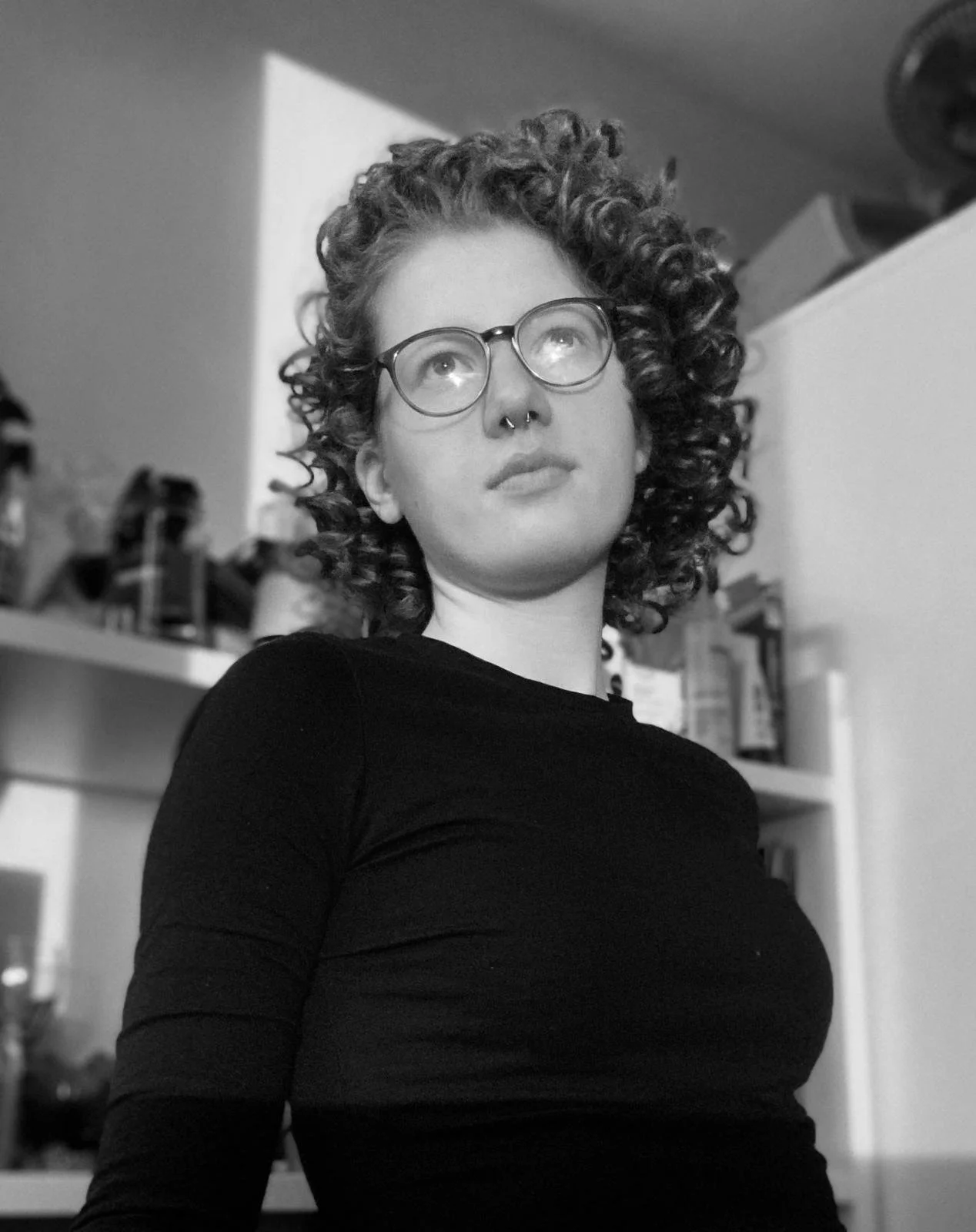
Discussing Poetry with Award-Winning Poet Catherine Ronan
MM: What is it about poetry that draws you to it? Why did you settle on poetry as a medium of writing?
CR: I suppose I find poetry comes more naturally to me than any other form of writing. I’ve been writing poetry since I was 9 years of age. It was always poetry that interested me. I suppose I like the brevity of it. I don’t write very long poems and I like achieving a lot with an economy of words. That’s the sort of poetry I like to read as well; poetry that says a lot in a small space. I think what you like to read is often similar to what you like to write.
MM: In terms of writing your poetry, when do you feel like you’re done with a poem?
CR: Well, I’m involved in lots of writing groups. I wouldn’t present a poem to any group without at least a few edits, but if I thought it was nearly there, or just running through its last paces, I would present it as it is always good to get another set of eyes on your work. Sometimes you can't see the wood for the trees or you don't notice the repetition of a word especially if repetition isn't used as a device but by mistake. Recently I wrote a poem, and I used the word terror twice, and I was like: ‘Oh no you can only use the word terror once!’ So, then I started using it as an anaphora, but sometimes that can escape you. I think that's one good reason to have another pair of eyes on it. Another thing is that, of course we all avoid obvious clichéd language, but sometimes song lyrics would sneak in, and I’d say: ‘why isn’t that poem right?’.
There's a poem in my first book called ‘Black Eagle’, and that took three years to finish because something wasn't right. What wasn’t right was exposed when I took it to a workshop. One of the lines was very like a disco song from the 80s. It was something like ‘sing to me of tomorrow’ and then the workshop group said, ‘oh that sounds like … while singing a tune, so it could be something as simple as that. So, when I think a poem is nearly finished — usually before I send it out – I take it to one of my poetry groups and let them take a scalpel to it (laughing). I can defend the body of my work of course, but it is good, it’s very satisfying, and I really know when a poem is finished if the members of the group have different interpretations of the poem. Then I say: ‘yes! this is ready to roll. because it doesn’t have just one interpretation, it’s got a variety of ways into it. That’s always something I want to achieve with my work, that it would be open to more than one interpretation.
MM: So, you’re in all kinds of different writing groups but you also do spoken-word poetry? Would you want to tell me about that and all the projects you do on the side, and the community around poetry?
CR: I am deputy poetry editor for Swerve and curate the Live Lit Lounge which is an intimate poetry space. I open that space up to not only page poets but spoken word artists as well, or people who have combined their poetry with music. Some people have collaborated putting together CDs of music and poetry. I've invited two spoken word artists down from Cork recently and there are a lot more events planned. I try to combine page poetry, collaborative projects, and spoken word, so there are three similar but slightly different areas, but I do like that it's all magical in its own way.
I've been mainly a page poet who likes to perform so I kind of straddle spoken word and page poetry. I was showcased by the Irish Writers Centre this year at the West Cork Literary Festival with three outstanding Spoken Word Artists, Julie Goo, Tim O’ Driscoll and Holly Hughes. That was an incredible milestone for me!!
I am also involved in DeBarra’s Spoken Word Clonakilty and MC the open mic section of that.
MM: We’ve briefly touched earlier on the poetry collections that you did, the two chapbooks and then your full poetry collection called Elemental Skin, right?
CR: The two poetry chapbooks were highly commended in the International Fool for Poetry Chapbook Competition but they haven't been published as such. They were called ‘Alchemy’ and ‘Synchrodestiny’. Some elements of those two chapbooks are in my current manuscript as opposed to publishing them separately as chapbooks. I'm looking to publish my second full collection as opposed to chapbooks. I am getting older so I feel like I don't really have time to be sending out five or six chapbooks but it is reaffirming to have them both highly commended in the International Fool for Poetry Chapbook Competition. It gives me confidence to draw on them for inclusion in the new collection.
The other chapbook that I was involved in was produced by Ó Bhéal, I represented Cork in the Cork-Coventry poetry exchange and there was a little chapbook put together with myself and Cedric Bikond. Cork is twinned with Coventry — and each year there is an exchange of two poets. It's a very good way of establishing a network in the UK and just meeting like-minded people.
MM: How was your experience with putting together your first collection? How did you choose which poems, and how was the process?
CR: It was very difficult because I’ve been writing since I was 9 and then like life got in the way. I had three children, a job and my businesses to run. It was only when my children got older that I took up writing seriously again. In 2018. I joined local writing groups and got involved in DeBarra’s Spoken Word, Ó Bhéal and Swerve. I had a few difficulties in the sequencing in that I had so much work to choose from that I had to get advice. I took that advice from The Cork County Council writer in residence at the time, Matthew Geden, He said that there had to be a cut-off point. So I looked at work written between 2018 and 2023, i.e. five years’ work and a good few hundred poems to choose from. I suppose I started with the ones that had been published or the ones that had been placed in competitions. Then I had to sequence the manuscript and there are many different ways of doing that really. For me personally, I had a cut-off point, so like any poem that I wrote after May 31st Mathew told me to not consider because the temptation is to keep on swapping out old work for newer work. Also, if you spend too long putting together a collection, the early part of the collection might not have the same feeling as the end. That was good advice, and how I structured it then was that because I was born in Cork and have lived in Cork all my life, the easiest thing to do was to start with the Cork themed poems and put them right in the middle. So, Cork is in the centre of the book, and then I knew what I was going to start with, I knew what I was going to finish with and then the rest worked out. In a loose way, because the first collection is like an accordion, you're showing all your styles and it doesn’t have to be themed or have a narrative arc or anything like that, but it is something important because you want to show the level of your skill and the variety of work that you can write. The poem that won the Winter Solstice Poetry Competition was the first poem in the book. I had poems in between that had been born out of a course I did with Dr. Jenny Butler in UCC : ‘Myth and Magic’. I knew that they had to be sprinkled in as well and then towards the end of the book I was developing a surrealist tendency in my work. As you read through the collection it tends to get a bit more surreal towards the end of the collection. The publisher I had wanted a collection with enough poems in it to create a spine. 87 poems is a lot for a first collection, but I'm not sorry because the spine was thick enough to have my name down the side which is a very important consideration. I would advise any person with a debut poetry collection to make sure that the spine is thick enough to carry your name. That was good advice I got from the publisher.
MM: I suppose your writing process has evolved over the years, what does your process look like now compared to before you had children?
CR: Well, the only thing that changed really is my level of computer skills, but the process is the same. I've just gotten a bit more technical that's all. When I needed to have that block of three or four hours to write or edit, it's very hard to grab those hours when you've got three children. The process of hearing the lines coming in and writing them down, that never changed. I would stop hoovering to scribble, my husband calls them the spider writings, and he'd say, ‘are you ever going to anything with those spider writings? They’re all over the house!’
So, spider writings continue but I try to keep the paper under control.
That’s probably a lie; it’s probably not under control really. I have boxes of spider writings to go through, but I keep them just in case I run out of steam, then I can go back to the spider writings and see what's there. But at the moment, it’s full steam ahead with the energy that I have at the minute, it's nice to get on with new work. So, I’ve hidden the spider writings in plastic boxes and they're in the walk-in wardrobe, but don't tell my husband!!
MM: You are working on your second collection at the moment; will it be as big as the first one?
CR: The manuscript is nearing completion; it's at the final editing stages and there are 64 poems in it as it stands. Now, I haven't got quite to the cutoff date yet, there's still a bit of wriggle room there but it's coming together. For the second book I wanted something more conceptual that the first. That difficult second album so to speak.
So ‘Toro’, the poem that you published — is definitely one of the narrative arc, that poem is towards the end of the manuscript but it's kind of pivotal. So ‘Toro’ is in the new manuscript and it follows a loose narrative arc, I haven't lost the mythology or the magic of surrealism because that’s what I like to write, but it has, like I said, a loose narrative arc.
MM: It’s good to have an overarching theme like that.
CR: Yes, and I find at this stage that I'm just hungry for experimentation as well, so now the loose narrative arc manuscript is nearly finished, I'm already thinking about what the theme of my next collection will be, so I'm already planting the seeds for next year's crop.
That’s what my process is, sometimes I would put an idea into my subconscious, leave it to cook away there and then see what comes out, given a week or two. Because if you say things like ‘I'd like to write a poem about mushrooms’ and you do a bit of research on mushrooms, then suddenly the radio has mushrooms, magazines have mushrooms, you see mushrooms everywhere. So I use that as a valuable tool, setting seeds in the subconscious and working that way.
MM: Yes, once you’ve collected a few rejections of your own you get used to it, then you just move on to the next one.
CR: Yes, and I suppose by being deputy poetry editor I can see things from the other side as well. People say that if you go for lots of interviews, it’s good to
be in the position of the interviewer as well because you can learn a lot in that process. It’s amazing, sometimes the submissions would just speak to each other, and really you have no control over that. I read blind so I don’t know whose submission I’m reading, and I just like what I like.
I tend to read people’s bios after I’ve made up my mind on the poem, I just go by my instinct in what I like, regardless of who’s written it. It’s the only way to go for me because that’s how new voices will be published as well, people who come out of nowhere. It’s always exciting to come across a new voice.
MM: If you were to give a young poet any advice, what would that be?
CR: The most important advice is don’t give up. I reckon once a poet, always a poet and don’t let people put you down and say that your style of poetry isn’t current, because poetry is art and there’s art for everybody’s taste, just like there’s poetry for everybody’s taste. If you like to rhyme, or to write funny poetry and some people don’t enjoy it, don’t take any notice. Art is very subjective, so is poetry. Don’t give up, and don’t be put off by people’s opinion if they think that what you’re doing isn’t on trend. You must be a trend setter sometimes and not just follow trends.
Reading is also so important. I’m always reading, I would spend at least an hour every day reading or researching poetry. I have to avoid the TV because I’m a binge person and I love cop series and period dramas so if there are 13 episodes I will have to watch all 13 of them as soon as possible. So, for me I have to be disciplined, because otherwise TV gets in the way. Sometimes it’s good for your brain, you can’t be working all the time but it’s good to recognize your limitations and to know yourself.
As hard as it seems at the start, you cannot take rejection personally. It’s a numbers game. The more poems you send out, the more chances you have of getting published, so I subscribed to the Angela Carr website, Wordbox with the listing of all the submissions, and I do that religiously. Last year I submitted something nearly every day. It’s a good habit to get into because it’s like getting a mail bag of rejections, but when you get one acceptance it’s amazing.
Rejection is definitely part of the art world, not just poetry but all sorts of arts. It’s cliché but you do have to grow a thick skin. It’s difficult for poets because by our nature, we’re not born with thick skins.
Catherine’s Poem Toro was published in The Medusa Issue 001.
If you want to hear more from Catherine you can have a look at:
her website: Catherine Ronan – Catherine Ronan is a poet from West Cork.
or her Instagram: https://www.instagram.com/catherinejjronan